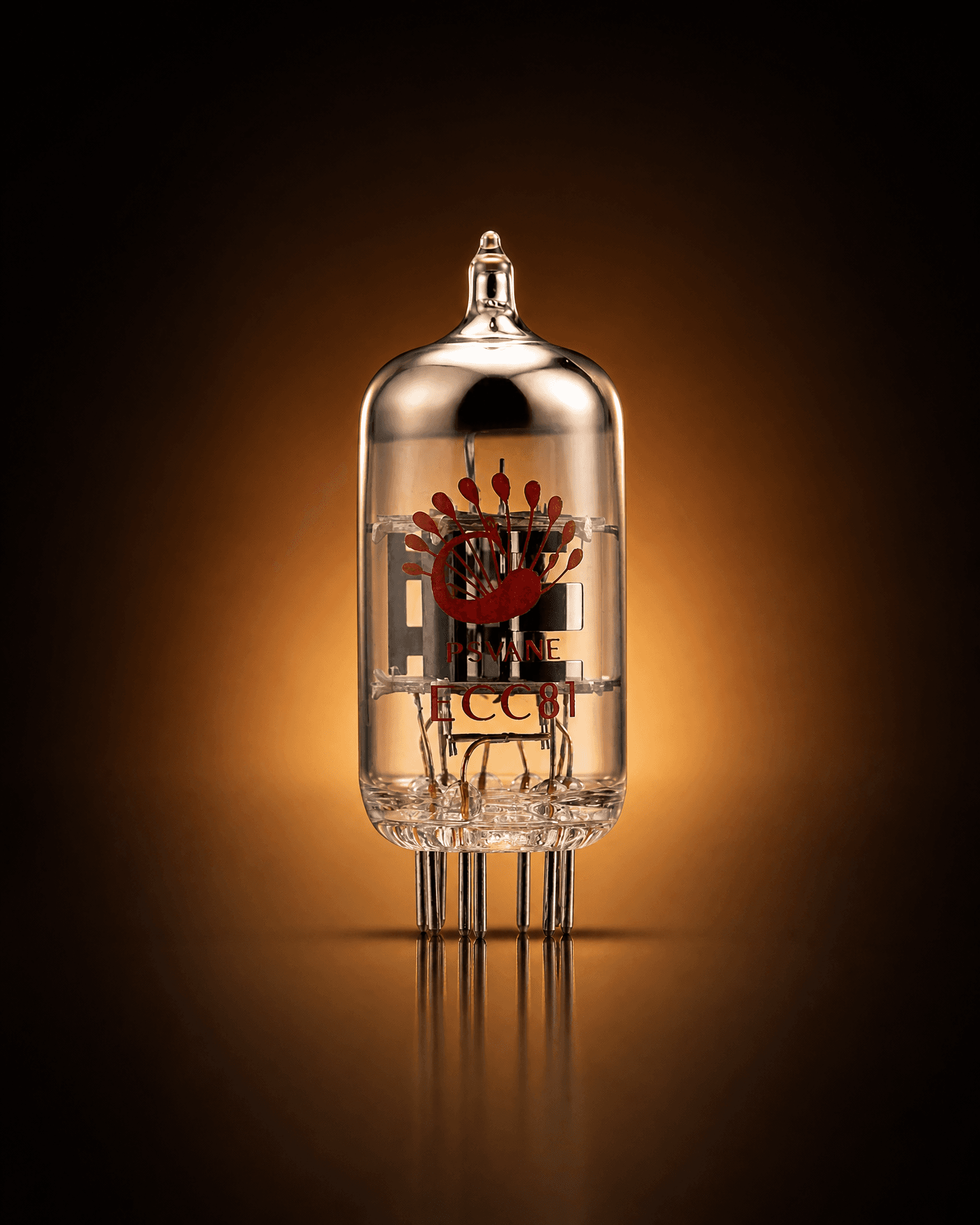
PSVANE ECC81 Replacement Tubes
12AT7-family tube for fast gain stages and phase-splitter use
PSVANE ECC81 / 12AT7 Replacement Tubes
Shop this category when the amplifier manual calls for ECC81, 12AT7, 6201, or another documented 12AT7-family label. ECC81 and 12AT7 are the same tube family, often used where the circuit needs more speed and drive than an ECC82 stage but less gain than an ECC83 / 12AX7 position.
Choose PSVANE ECC81 / 12AT7 replacement tubes for phase splitters, reverb drivers, signal stages, and some driver positions where circuit balance matters. Buy a matched pair when two tubes serve left/right channels or a phase-splitter-style pair, and stay in the same family unless the amplifier maker approves a different path.
Best fit
- Amplifier positions clearly marked ECC81, 12AT7, or compatible 12AT7-family labels.
- Phase-splitter and driver stages where balance and stability matter.
- Systems that need clean attack, clear treble, and controlled midrange energy.
Buying notes
- Use matched tubes for phase-splitter or stereo channel positions when available.
- Use the ECC81 / 12AT7 family only when the manual confirms that driver, phase-splitter, reverb, or signal-stage path.
- Do not replace ECC83 / 12AX7 with ECC81 / 12AT7 just to change tone unless the circuit supports it.
- For guitar amplifiers, confirm whether the tube is used for preamp gain, reverb, or phase splitting before ordering.
The safest match starts with the amplifier manual. Send the tube chart or current tube label if you are unsure.
ECC81 buying questions
Is ECC81 the same as 12AT7?
Yes. ECC81 and 12AT7 are common names for the same tube family, with 6201 often appearing as a related industrial label.
Should I buy a matched pair of ECC81 tubes?
Buy a matched pair when two ECC81 / 12AT7 tubes work together across stereo channels, a driver pair, or a phase-splitter section.
Can ECC81 replace ECC83?
Only when the amplifier maker allows it. ECC81 / 12AT7 and ECC83 / 12AX7 have different gain and circuit behavior.